

CADD Graphics

Carolina Readiness Supply

Websites
NC Renegade on Twitter
NC Renegade on Gab
NC Renegade on Truth Social
Wes Rhinier on Gab
12 Round Blog
Barnhardt
Cold Fury
DanMorgan76
Defensive Training Group
The Deth Guild
The Feral Irishman
First in Freedom Daily
Forloveofgodandcountry's Blog
Free North Carolina
Knuckledraggin My Life Away
Liberty's Torch
90 Miles From Tyranny
Professor Preponomics
Publius-Huldah's Blog
Straight Line Logic
The Tactical Hermit
War on Guns
Western Rifle Shooters Association
Categories
-
Recent Posts
Recent Comments
- Priscilla King on Should Erika Kirk Forgive Her Husband’s Killer?
- Priscilla King on Should Erika Kirk Forgive Her Husband’s Killer?
- David on No Mercy: Woke Leftists Are The Problem And They Need To Go
- phil132350 on US Color Revolution
- Martha on Who Had Foreknowledge of 9/11?
Archives
Meta
Joe Rogan Experience #2237 – Mike Benz
Posted in Editorial
Comments Off on Joe Rogan Experience #2237 – Mike Benz
Same As the Old Boss
Our "moderate jihadist allies" are showing their true colors.
— Matt Bracken (@Matt_Bracken48) December 10, 2024
Paid for by our own CIA. https://t.co/BZkkxyePRL
Posted in Editorial
8 Comments
NJ Governor Murphy
NJ Governor Phil Murphy: "The minute we get eyes on these drones, they go dark"
— End Wokeness (@EndWokeness) December 10, 2024
WTFF???
pic.twitter.com/LmHpkBvQrJ
Posted in Editorial
18 Comments
Syria’s Fall: In-Depth Analysis

Syria has fallen, and history will be strewn with an endless banquet of takes and interpretations as to what happened, how, and why. Here I offer one humble middle approach to piece it together, supported by facts and some deductive reasoning, rather than emotional gut reactions.
Trust the Science?

Fake Alzheimer’s Science
The latest scientific scandal isn’t even remotely surprising. Most science – yes, MOST science – is fraudulent. And we’re not talking about obviously fake science like vaccines, psychiatry, and evolutionary biology, we’re talking about gold-standard, peer-reviewed studies published in well-respected science journals that are landmark studies that serve as the basis for the present scientific consensus in the relevant field:
Exclusive: John Mearsheimer vs Alexander Dugin: All You Need to Know about China, Russia, and the US
Heavy weights on geopolitics have a conversation.
Posted in Editorial
Comments Off on Exclusive: John Mearsheimer vs Alexander Dugin: All You Need to Know about China, Russia, and the US
Did Russia Just Set a HUGE Trap in Syria?
Well this is an interesting alternative take.
Posted in Editorial
3 Comments
Keep This in Mind
Syrian fiat currency has become worthless overnight. Only #Gold and #Silver cannot be destroyed…pic.twitter.com/FmUfgrZPS0
— Eric Yeung 👍🚀🌕 (@KingKong9888) December 9, 2024
Israel Striking Bases & Equipment Across Syria, Including Assad’s Chemical Weapons Sites

Israeli warplanes in the last several hours have been conducting major airstrikes against facilities across Syria, just 48 hours after the Assad government’s fall and the entrance of Al-Qaeda linked militant factions into Damascus.
“At least two explosions heard in Damascus have taken place in the area of Barzeh, north of Damascus, where the Syrian Scientific Studies and Research Centre has an office,” several eyewitnesses have told Reuters.
…
A weapons warehouse near the Damascus international airport, which has ceased operations, has also been hit. Massive strikes have been reported on Latakia port as well, which giant fireballs lighting up the night sky.
Amid the chaos of the HTS takeover of the country over the last week, and before any type of new government can coalesce in Damascus, it appears Israel is preemptively taking out all military technology and heavy weaponry before anyone else can access it.
An Israeli broadcast correspondent from Kann writes that “An Israeli source tells me: Israel’s goal is to destroy everything from Assad’s army that could fall into the hands of the rebels – from tanks to missiles. We are destroying the equipment of the Assad army.”
Posted in Editorial
3 Comments
47 Is Coming to Town
TRUMP SINGS: "47'S COMING TO TOWN" 🎶🎄 pic.twitter.com/2JpEgYpRDu
— Shawn Farash (@Shawn_Farash) December 9, 2024
Posted in Editorial
Comments Off on 47 Is Coming to Town
Greater Israel
Translation: greater Israel is expanding. https://t.co/FGEFGtmxE5
— Alex Jones (@RealAlexJones) December 8, 2024
Posted in Editorial
9 Comments
Mostly Peaceful
BLM is calling for black people to start killing white people. Total psychopaths.
— Mostly Peaceful Memes (@MostlyPeacefull) December 9, 2024
pic.twitter.com/QjMNAcjaru
Posted in Editorial
18 Comments
Is There Any Reference to Supernatural Phenomena in Thomas Aquinas’ Five Ways?
From Grok:
Aquinas’ “Five Ways” (see below) primarily deal with philosophical and metaphysical arguments rather than explicitly referencing supernatural phenomena. Here’s a clarification on why this might be:
- Philosophical Approach: Aquinas was a Scholastic philosopher, and his arguments are constructed within the framework of Aristotelian philosophy, which deals with natural theology. He seeks to demonstrate God’s existence through reason and observation of the natural world, not through direct appeals to supernatural events or miracles.
- Natural Order: Each of the Five Ways focuses on aspects of the natural order or causality observable in the world around us:
- Motion is about physical change.
- Efficient Cause deals with causality in nature.
- Contingency addresses why things exist rather than not.
- Gradation observes the degrees of qualities in nature.
- Design (teleology) looks at how natural things act towards ends.
- Implication Rather Than Explicit Reference: While Aquinas doesn’t directly mention supernatural phenomena like miracles, his arguments implicitly lead to the conclusion of a supernatural being (God) as the cause behind these natural observations. The leap from natural observation to a supernatural cause is made through logical deduction rather than through citing specific supernatural events.
- Context of Proof: Aquinas’ goal was to prove God’s existence through what could be known by human reason alone, without necessarily relying on revelation or supernatural events. His intention was to show that one could arrive at the concept of God using only the tools of philosophy and natural observation.
- Subsequent Interpretation: Later theologians and philosophers have sometimes interpreted or expanded these arguments to include discussions of supernatural phenomena, but Aquinas himself keeps his arguments grounded in what can be observed or logically deduced from nature.
In essence, Aquinas’ arguments are about using natural philosophy to point towards a supernatural conclusion, but they do not explicitly use supernatural events as part of the proof. He was aiming to show that belief in God could be rational even to those who might not accept divine revelation or miracles as evidence.
~~~~~~~~~~~~~~~~~~~~~~~~
Thomas Aquinas, in his work “Summa Theologica,” presents five arguments for the existence of God, commonly known as the “Five Ways.” These arguments are largely metaphysical, but the second and fifth ways touch explicitly on aspects of design or order in the universe. Here are the “Five Ways” with special attention to those relevant to the design argument:
1. The Argument from Motion (or Change)
- Summary: Aquinas argues that everything in motion must be moved by something else. Since there cannot be an infinite regress of movers, there must be a first unmoved mover, which is God.
- Key Point: This argument focuses more on the causality of motion rather than design per se.
2. The Argument from Efficient Cause
- Summary: Nothing can cause itself, and there cannot be an infinite regress of causes. Therefore, there must be a first efficient cause, which everyone understands to be God.
- Design Aspect: While not directly about design, this argument implies an order or pattern in causality that leads back to a single cause, which can be seen as an underlying design or structure to reality.
3. The Argument from Possibility and Necessity (Contingency)
- Summary: We observe things in the world that are contingent (they exist but could not have existed). If everything were contingent, at some point there would have been nothing, and thus nothing would exist now. Therefore, there must be something necessary, whose existence is not contingent on anything else, and this is God.
- Key Point: This is less about design and more about the necessity of existence.
4. The Argument from Gradation (Degrees of Perfection)
- Summary: We see things in the world that vary in degrees of goodness, truth, nobility, etc. There must be a maximum in each genus (category), which is the cause of all in that genus. This maximum is God.
- Key Point: This argument implies a hierarchy or order in qualities which suggests an ultimate source of these perfections.
5. The Argument from Design (Teleological Argument)
- Summary: We see that things which lack intelligence, such as natural bodies, act for an end or purpose. This is evident from how they consistently achieve their ends, like how an arrow hits its target. Things that lack knowledge cannot aim toward an end unless directed by something with knowledge and intelligence. Therefore, there must be some intelligent being by whom all natural things are directed to their end, and this being we call God.
- Design Aspect: This is the most explicit argument from design. Aquinas notes the order and purposefulness in nature, suggesting that such teleology cannot be accounted for by chance or the properties of matter alone but requires an intelligent designer.
Key Points for Design:
- Aquinas’ fifth way is the cornerstone for what later became known as the teleological or design argument. It argues from the observed natural teleology (purpose or design) to the existence of an intelligent designer.
- The second way, while primarily about causality, also implies a kind of design in the sense that the structure of causes points to an ultimate cause, which could be interpreted as a designed system.
In summary, while Aquinas’ arguments are varied, the fifth way is the most direct in arguing from the design or purposeful nature of the universe to the existence of God. However, elements of order, causality, and structure in the other ways also contribute to an indirect argument from design.
Posted in Editorial
11 Comments
The Life and Morals of Jesus of Nazareth
From Grok:
Thomas Jefferson created “The Life and Morals of Jesus of Nazareth” for several interrelated reasons:
- Personal Beliefs: Jefferson was influenced by Enlightenment thought and deism, which emphasized reason, natural law, and the belief in a creator who does not intervene in the universe. He viewed many of the miracles and supernatural elements in the New Testament with skepticism, seeing them as later additions by the early Christian church rather than the direct teachings of Jesus.
- Moral Philosophy: Jefferson was deeply interested in ethics and morality. He saw in Jesus’ teachings a profound source of moral guidance that could be separated from what he considered to be the supernatural accretions of Christianity. By compiling his Bible, Jefferson aimed to extract what he believed were the true, rational moral teachings of Jesus, which could serve as a universal guide for human conduct.
- Educational Purpose: Jefferson intended his version of the Bible to be an educational tool, particularly for his own study but also potentially for others. He wanted to present Jesus as a great moral philosopher whose teachings could be appreciated even by those who did not accept traditional Christian theology.
- Clarification of Christianity: Jefferson was critical of what he saw as the corruption or misinterpretation of Jesus’ original message by the Christian church. His Bible was, in part, an attempt to return to what he believed was the essence of Jesus’ message, free from what he perceived as the distortions of institutional religion.
- Private Reflection: This project was also a personal endeavor. Jefferson spent his later years at Monticello, engaging in intellectual pursuits. The creation of this book was an act of private scholarship, reflecting his ongoing interest in religion, philosophy, and ethics.
Jefferson never intended for his work to be a substitute for the New Testament or to replace it in the Christian liturgy. Instead, it was a private exercise in extracting what he considered the core moral messages of Jesus, tailored to his own rationalist and deistic worldview. This project underscores Jefferson’s complex relationship with religion, where he admired Jesus as a moral teacher but rejected much of orthodox Christian doctrine.
~~~~~~~~~~~~~~~~~~~~
Concerning supernatural signs from God:
The Bible does not explicitly teach that mankind should believe in God solely because of miracles, but miracles play a significant role in the narrative and teachings of both the Old and New Testaments for several reasons:
- Demonstration of Divine Power: Miracles in the Bible often serve to demonstrate God’s power, authority, and presence. For instance, in the Old Testament, events like the parting of the Red Sea (Exodus 14) or Elijah’s challenge to the prophets of Baal (1 Kings 18) are used to show God’s superiority over other gods and to affirm His covenant with His people. In the New Testament, Jesus’ miracles such as healing the sick, raising the dead, and walking on water are presented as signs of His divine nature and authority.
- Faith and Belief: While miracles can lead to belief, the Bible also emphasizes faith that goes beyond the witness of miracles. For example, in John 20:29, Jesus speaks to Thomas, saying, “Because you have seen me, you have believed; blessed are those who have not seen and yet have believed.” This suggests a higher form of faith, one not based solely on witnessing miracles.
- Confirmation of Message: Miracles often accompany or confirm the message of God’s servants. In Acts, miracles performed by the apostles are seen as validations of their teaching and authority from God (Acts 2:43, 3:6-8). However, these acts are meant to point to the message of salvation through Jesus Christ, not merely to be ends in themselves.
- Encouragement of Faith: Miracles can serve as an encouragement or sign for those who already believe or are seeking faith. They’re not just for skeptics; they’re also for the faithful, to strengthen their trust in God’s providence and love.
- A Call to Repentance: In some cases, miracles are calls to repentance or to acknowledge God’s sovereignty. The prophet Jonah’s experience with the great fish and subsequent preaching to Nineveh led to the city’s repentance (Jonah 3).
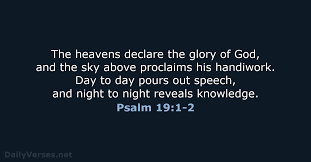
- Theological Teaching: The Bible also teaches that belief in God should be based on His character, His word, and His relationship with humanity, not just on miraculous signs. The Psalms often praise God for His works and creation, suggesting that the order and beauty of the world are themselves reasons to believe in God.
- Warning Against False Miracles: The Bible warns against being misled by false miracles (Matthew 24:24, 2 Thessalonians 2:9-10). This caution implies that miracles alone are not the foundation of true faith; one must discern the source and purpose of the miracle.
In summary, while miracles in the Bible are significant and can lead to or confirm belief, the text also promotes a faith that is rooted in understanding God’s nature, His promises, and His word. The Bible encourages a relationship with God that transcends mere proof through miracles, advocating for a deeper, more personal trust and commitment.
Posted in Editorial
11 Comments
Will This Be the Excuse for Another US Proxy War?
Does the military-industrial complex WANT war in Syria? @RandPaul gives a warning: "We have 900 soldiers [in Syria]. 900 soldiers isn't enough to organize a parade…they become targets, not a deterrent. If some of them are killed, and I hope this doesn't happen, then all of a… pic.twitter.com/AUxg8BBier
— Glenn Beck (@glennbeck) December 9, 2024
Posted in Editorial
2 Comments